
"frost pruning"
90 article(s) found

In 2022, Brazil's Arabica coffee production will lose about 4% due to frost.
Journalist, coffee analyst and agricultural liaison coordinator Maja Wallengren reports in STIR Tea Coffee, the world's leading tea and coffee industry magazine, that frost affects areas so widely in Brazil's coffee-growing regions that it accounts for 65% of Brazil's total harvest during the average crop cycle. STIR Tea Coffee gets exclusive information from senior Brazilian government officials
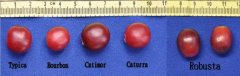
Coffee cultivation techniques how to cultivate coffee seeds pruning and fertilization of coffee
Professional coffee knowledge exchange more coffee bean information please follow the coffee workshop (Wechat official account cafe_style) A coffee tree bears fruit several times a year. Coffee is a perennial evergreen shrub of Rubiaceae. At present, there are two kinds of coffee with economic value: Coffea arabica (Arabica) and Coffea canephora (Robusta).

What is a coffee belt? How to plant coffee trees? Where is it suitable for planting?
Professional coffee knowledge exchange more coffee bean information please follow the coffee workshop (Wechat official account cafe_style) what is the coffee belt? How to plant coffee trees? Where is it suitable for planting? The coffee belt refers to the area where coffee beans are grown in the latitudes of the earth. Because it happens to form a ribbon, it is called a coffee belt. This coffee belt is between the Tropic of Cancer and the Tropic of Cancer.

Grinding scale of San Juan Xido Coffee beans in Honduras Variety treatment manor taste introduction
The grinding scale of San Juan Xido coffee beans in Honduras the taste of the manor introduces that the particles of coffee beans in Honduras are large in shape, uniform in size, uniform in color and shiny. In order to facilitate harvesting, farmers will prune the coffee trees to no more than 150 centimeters, because if they grow too high, they must set up ladders to pick, which is not only time-consuming, but also may be hurt by bending branches.

Guatemala Antigua Coffee Bean Flavor Description Processing Characteristics Grinding Scale Introduction
Guatemala Antigua Coffee Bean Flavor Description Processing Characteristics Grinding Scale Introduction Coffee was really introduced to Guatemala in 1750 by Father Jesuit, and German colonists developed the coffee industry here in the late 19th century. Today, most of the coffee industry is produced in the south of the country. Guatemala has seven major coffee-producing regions: Antigua, Coburn, and the Caribbean.

The unique fruit named "Incht" in the tiny South Fruit Highland producing area of Guatemala, Incht Village.
. Arabica coffee grows at an altitude of about 2000 meters, while Robusta grows at an altitude of about 900m. If the altitude is too high, the coffee tree will frost because the temperature is too low, and even can not survive. On the other hand, Vivette Nanguo's coffee is not prone to frost even if it is planted at an altitude of nearly 2000 meters above sea level, and the high but not cold growing environment creates high-quality very hard beans.

A brief introduction to the characteristics of flavor and taste of Honduran coffee beans with multi-quality and fine quality
The granules of coffee beans in Honduras are large in shape, uniform in size and glossy in color. In order to facilitate harvesting, farmers will prune the coffee trees to no more than 150 centimeters, because if they grow too high, they have to set up ladders to pick, which is not only time-consuming, but also may damage the trees by bending branches. As the ripening period of each fruit of the coffee bean is different, it is necessary to keep the coffee bean in good condition.

Description of flavor and taste of coffee beans in Incht Manor, Guatemala
Flavor description of coffee beans in the producing area of Incht Manor in Guatemala Coffee cultivation in Incht Manor began in 1900. With a total area of 720 hectares, it maintains 470 hectares of primeval forest in order to maintain the natural and precious microclimate. To prevent the microclimate of the whole manor from being affected by excessive reclamation. Use reasonable farming methods to protect soil nutrients

Introduction to the quality characteristics of Manor Flavor description treatment in altitude Coffee producing area of Honduras
Honduran coffee above sea level the granules of Honduran coffee beans are large in shape, uniform in size, uniform in color and shiny. In order to facilitate harvesting, farmers will prune the coffee trees to no more than 150 centimeters, because if they grow too high, they have to set up ladders to pick, which is not only time-consuming, but also may damage the trees by bending branches. Because the ripening period of each fruit of coffee beans is different.

Honduras Coffee Bean Flavor Description Taste Manor Area Treatment Variety Features Introduction
Honduras coffee beans flavor description taste estate production area processing method variety characteristics Honduras coffee beans particle shape larger, consistent size, uniform color shiny. To make harvesting easier, farmers prune coffee trees to no more than 150 centimeters, which requires a ladder to pick, which is time-consuming and may damage the tree by bending branches

Flavor characteristics of Guatemala Antigua Alem Volcano Coffee beans _ Antigua Coffee Brand ALOM
Professional coffee knowledge exchange more coffee bean information please follow the coffee workshop (Wechat official account cafe_style) Guatemala boutique coffee bean promotion-Volcano Aram coffee beans produced in Antigua, one of the eight famous producing areas in Guatemala, the canyon in this area is surrounded by three volcanoes: Agua, Tierra del Fuego and Akatel Nanguo, in which the fire

What are the conditions for growing coffee beans? How do you grow high-quality coffee beans?
Professional coffee knowledge exchange more coffee bean information please pay attention to the coffee workshop (Wechat official account cafe_style) what are the growing conditions of coffee beans? How do you grow high-quality coffee beans? Many people think that Taiwan is not suitable for growing coffee, or that it is impossible for Taiwan to grow good coffee. The so-called good coffee refers to high quality coffee. Coffee cultivation and quality factors, except

Introduction to the Grinding scale of the Variety characteristics of Honduran Coffee Flavor description
Honduran Coffee Flavor description treatment Variety characteristics production area Grinding scale introduction Honduran Coffee has a good reputation and is suitable for mixed coffee. Coffee in Honduras is imported from El Salvador. Honduras produces high-acid high-quality coffee. Like other places, the coffee grade in Honduras depends on altitude: at 700 to 1000 meters above sea level

Yega Sheffield Sun treatment Class in Ethiopia Coffee producing area Magi BenchMaji Esseobi
Ethiopia coffee producing area mainly has eight major coffee producing areas: Ekempti, Limu, Illubabor, Djimma, Harrar, Teppi/Bebeka, Sidamo, Yirgacheffe. Ethiopian coffee is highly rated in Taiwan, especially when compared with Ethiopia's Harrar, Sidamo and Yirgacheffe.
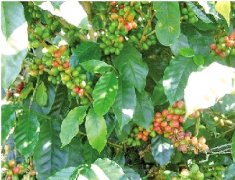
Yega Xuefei Sun Banki Maggie Coffee cooked beans Ethiopia G3
There are eight main producing areas of Ethiopian coffee: Ekempti, Limu, Illubabor, Djimma, Harrar, Teppi/Bebeka, Sidamo, Yirgacheffe. Ethiopian coffee is highly rated in Taiwan, especially Chinese people are particularly interested in the three famous producing areas of Ethiopia, namely Harrar, Sidamo and Yirgacheffe.

Yega Xuefei Sun Banki Maggie Coffee cooked beans Ethiopia G3 BenchMaji
There are eight main producing areas of Ethiopian coffee: Ekempti, Limu, Illubabor, Djimma, Harrar, Teppi/Bebeka, Sidamo, Yirgacheffe. Ethiopian coffee is highly rated in Taiwan, especially Chinese people are particularly interested in the three famous producing areas of Ethiopia, namely Harrar, Sidamo and Yirgacheffe.

Characteristics of African coffee beans acting as agents of African coffee beans
There are eight main producing areas of Ethiopian coffee: Ekempti, Limu, Illubabor, Djimma, Harrar, Teppi/Bebeka, Sidamo, Yirgacheffe. Ethiopian coffee is highly rated in Taiwan, especially Chinese people are particularly interested in the three famous producing areas of Ethiopia, namely Harrar, Sidamo and Yirgacheffe.

Treatment of grinding degree and baking degree of San Juan Xido boutique coffee beans with large particle shape
Hongduras coffee bean particles are large in shape, uniform in size, uniform in color and glossy. In order to facilitate harvesting, farmers will prune the coffee trees to no more than 150 centimeters, because if they grow too high, they have to set up ladders to pick, which is not only time-consuming, but also may damage the trees by bending branches. As the ripening period of each fruit of the coffee bean is different, it is necessary to keep the coffee bean good.

Flavor description of Honduran coffee beans the characteristics of regional varieties by taste treatment
The flavor of Honduran coffee beans describes the characteristics of taste treatment. Honduran coffee is introduced from El Salvador. Coffee production was lukewarm at first until the frost in Brazil in 1975. At that time, Brazil was hard hit and coffee production plummeted, while Honduras took the opportunity to take advantage of the surge in coffee production from 500000 bags to 1.8 million bags and was ransacked. Since then,

Yega Xuefei Sun treatment Banki Magi Ethiopia primeval Forest China Coffee net Fine Coffee
There are eight main producing areas of Ethiopian coffee: Ekempti, Limu, Illubabor, Djimma, Harrar, Teppi/Bebeka, Sidamo, Yirgacheffe. Ethiopian coffee is highly rated in Taiwan, especially Chinese people are particularly interested in the three famous producing areas of Ethiopia, namely Harrar, Sidamo and Yirgacheffe.